- (720) 383-6040
- Mon - Sat: 8 AM - 6 PM | 24/7 Emergencies

Tree Services Denver Colorado cleans up tree damage after snowstorms and high winds across Denver, CO. We remove broken and hanging limbs, cut up fallen trees, prune damaged trees back to sound wood and haul away the debris. Call (720) 383-6040 for a free quote.
Storm damage cleanup is the removal of broken branches, hanging limbs and downed trees after a storm, together with corrective pruning of the trees left standing. In Denver the usual cause is heavy, wet snow in spring and fall, when branches still in leaf hold the snow until they snap.
Denver property owners are responsible for cleaning up debris from trees on their own property and from trees in the public right-of-way next to it, according to the Office of the City Forester. Our crew does that work for you. If a tree is on your house, blocking your driveway or tangled in wires, that is an emergency: see emergency tree removal.
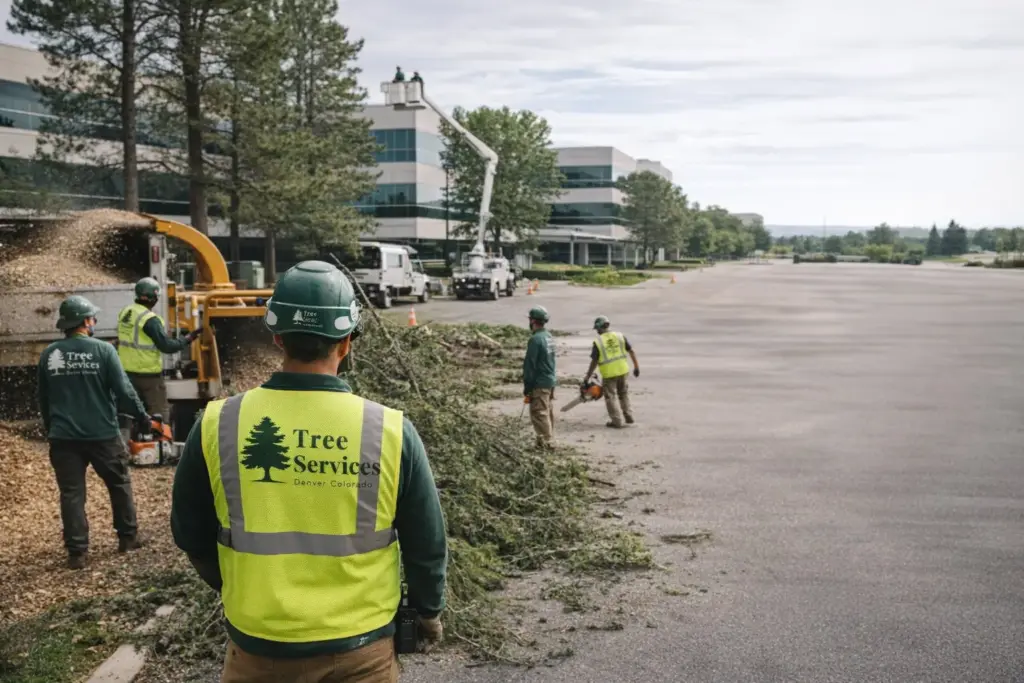
We walk the property, check each damaged tree for hanging limbs, split branches and cracked trunks, and note anything close to buildings or utility lines.
We set out which limbs come down, which trees can be saved with pruning and which are too damaged to keep, and give you a quote for the work.
The crew takes down hanging and broken limbs first, then makes clean pruning cuts back to sound wood so the tree can close its wounds. Trees that cannot be saved are removed in sections.
We chip the branches, haul away the logs and debris and leave the yard clear.
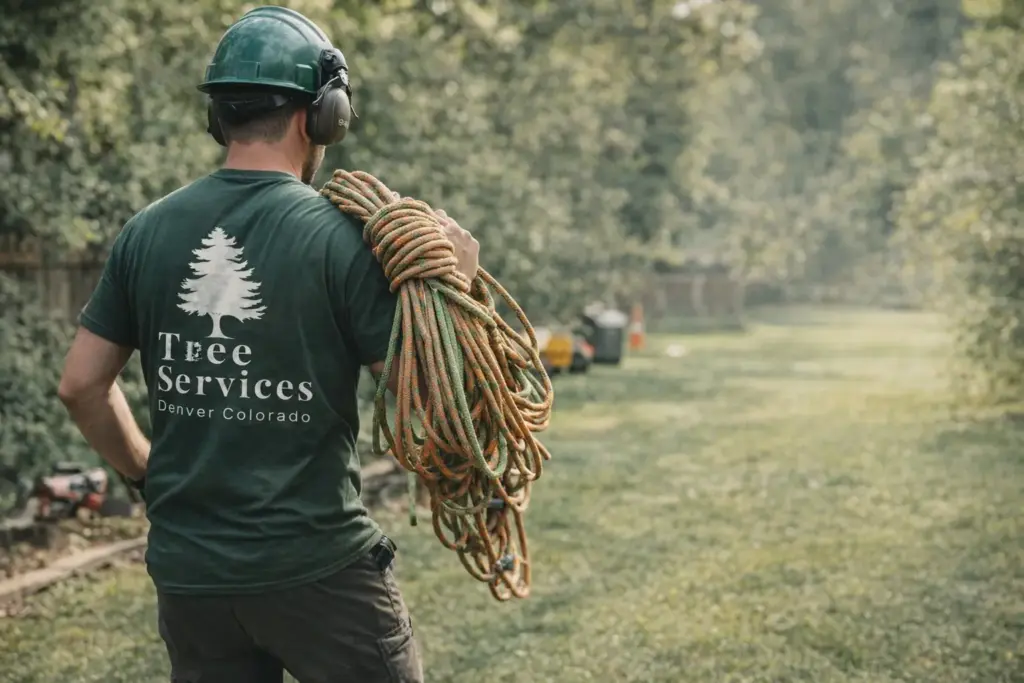
Broken branches caught in the canopy can fall days after the storm. Taking them down removes the risk to people, cars and roofs below.
Torn, ragged breaks heal poorly. Clean pruning cuts at the right point let the tree seal the wound and lower the chance of decay.
Clearing limbs from sidewalks, driveways and the right-of-way next to your property keeps access open, which Denver expects property owners to look after.
A check after the storm finds cracked limbs and split branch unions that are not obvious from the ground, before the next storm finishes the job.
We clean up storm-damaged trees throughout the City and County of Denver, including Cherry Creek and the neighborhoods below. Here is what cleanup after a heavy snow or windstorm usually involves in each area.
Broken limbs fall onto sidewalks, parked cars and alleys. Owners are responsible for debris from the right-of-way trees in front of their property. See who is responsible for fallen branches.
Old shade trees and declining ash both shed limbs in wet snow. Hanging branches come down first, then corrective pruning.
Heavy limbs over roofs and garages are the main risk. Damaged trees are pruned back to sound wood where they can be kept.
The big canopies that define the neighborhood catch the most snow. Expect large limbs, not twigs, after a spring storm.
Fast-growing volunteer trees along fences and alleys break first. Cleanup is a good moment to remove them for good. See getting rid of Siberian elm and tree-of-heaven.
Young trees with weak branch unions split under early snow. Clean cuts and structural pruning help them recover.
Property owners. Denver’s Office of the City Forester states that owners are responsible for cleaning up debris from trees on private property and from trees in the public right-of-way next to their property. You can do the work yourself or hire a company to do it. More detail: who is responsible for fallen branches in Denver?
If a fallen tree or branch has to be removed immediately to clear a street, call 311 and give the address. The city will assess it and may remove it, and the cost can be billed to the responsible property owner. For limbs on your own property, call us on (720) 383-6040.
Denver residents can drop off branches at the Cherry Creek Recycling Drop-off center, near East Cherry Creek Drive South and South Quebec Street. The city also collects a limited number of bundled branches with large item pickup. Check the city’s website for current hours and size limits, or have us haul everything away. Hours and limits are in where to take tree branches in Denver.
Gently, and only where it is safe. Brush light snow off small trees and shrubs with a broom, working upward, and do not shake the branches, which can snap them. Stay out from under large limbs that are bending or cracking, and never go near branches touching power lines. See how to protect trees from heavy snow in Denver and which trees break most in Denver snowstorms.
Often, yes. A tree that still has its main trunk, most of its major branches and at least half of its crown will usually recover with corrective pruning. A split trunk or the loss of most of the canopy usually means the tree should be removed. Use the guide in can a storm-damaged tree be saved?
Hanging and broken limbs over buildings, driveways and walkways should come down as soon as it is safe to do so. Corrective pruning of the rest of the tree can follow over the next few weeks. There is no need to rush into removing a tree that is not an immediate hazard.
Many homeowners policies pay for tree removal when the tree has damaged an insured structure such as a house, garage or fence. Clearing fallen limbs that hit nothing is often not covered. Cover and limits vary, so photograph the damage and check with your insurer before work starts.
The price depends on how many trees are damaged, the size and height of the broken limbs, whether any trees have to be removed, how close the damage is to buildings and utility lines, and how much debris has to be hauled away. Each job is quoted individually, and quotes are free.
Yes. Emergency tree removal is available 24/7 for trees and limbs on roofs, vehicles and driveways. Call (720) 383-6040. If a tree or branch is on a power line, stay well clear and report it to Xcel Energy on 1-800-895-1999 first.