- (720) 383-6040
- Mon - Sat: 8 AM - 6 PM | 24/7 Emergencies

Tree Pruning and Trimming Services in Denver, CO
Tree Services Denver Colorado prunes and trims trees for homes and commercial properties across Denver, CO. Our certified arborists remove dead, weak and overgrown branches, thin crowded canopies and clear limbs away from roofs and walkways, then clean up the site. Call (720) 383-6040 for a free quote.
Free Quotes · 24/7 Emergency Service
About Our Denver Tree Pruning Service
Tree pruning is the selective removal of branches to improve a tree’s health, structure and safety. Tree trimming usually means cutting back growth for shape, size or clearance. On most jobs we do both in one visit: removing dead and diseased limbs, thinning crowded branches so more light and air reach the canopy, and raising or reducing the crown where it crowds a roof, driveway or sidewalk.
Good pruning keeps a tree’s natural form. Topping, which means cutting main branches back to stubs, is not proper pruning: it weakens the tree and leads to fast, poorly attached regrowth. In Denver, the Office of the City Forester can treat a topped right-of-way tree as irreparably damaged and require the owner to pay for its value. Pruning is one of several tree services we provide in Denver.
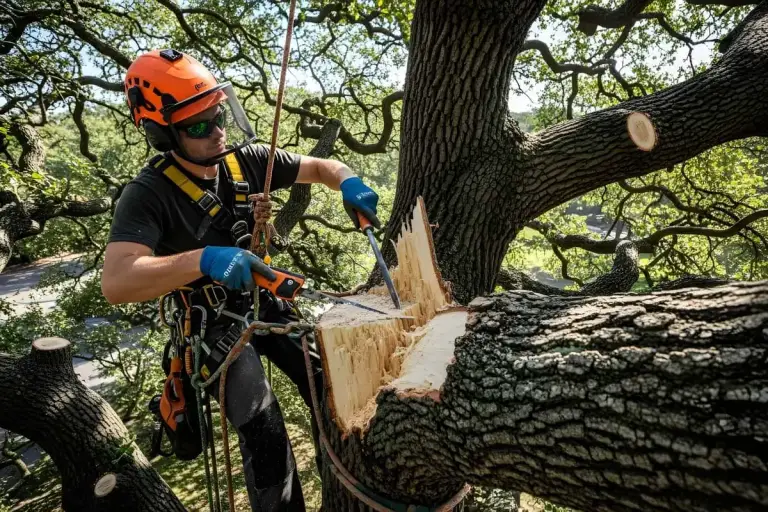
How Our Tree Pruning Process Works
1. On-Site Assessment
During our visit we assess the species, condition and structure of your trees and talk through your goals, such as safety, clearance, appearance or tree health, before recommending a pruning approach.
2. Pruning Plan and Quote
Every tree is different, so we set out which branches come off and why, based on branch placement, growth pattern and your preferences. Arborists generally avoid removing more than about a quarter of a tree’s live canopy in one season.
3. Pruning by Certified Arborists
Our certified arborists use professional-grade tools to make precise cuts, removing deadwood, thinning crowded canopies and shortening or raising branches while keeping the tree’s structure sound.
4. Chipping and Cleanup
We chip the branches, remove the debris and clean the work area, so your yard is left neat and ready to use.
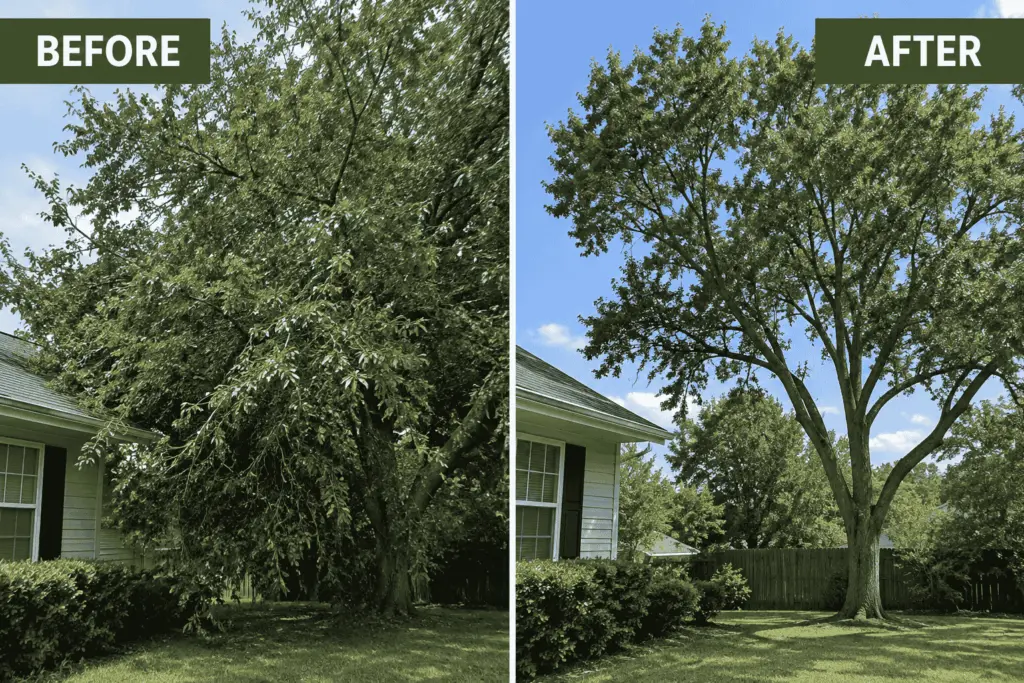
Why Choose Us for Tree Pruning in Denver?
- Experienced arborists. Our team has extensive training in tree biology and pruning techniques.
- Safety first. We follow strict safety protocols and use reliable equipment to protect your property and our workers.
- Precise pruning. We make healthy cuts that limit the spread of disease and encourage strong growth.
- Full cleanup. We handle branch chipping and site cleanup so you do not have to.
- Transparent pricing. Clear estimates with no hidden fees.
- Customer satisfaction. We aim to exceed your expectations on every project.
Benefits of Regular Tree Pruning
Safer Trees
Removing weak, dead and hazardous limbs reduces the risk of falling branches. In Denver that matters most in heavy, wet spring and fall snowstorms, when overloaded limbs break. For limbs that have already come down, see emergency tree removal.
Property Protection
Pruning branches away from roofs, fences and utility lines prevents damage to buildings and keeps walkways and driveways clear.
Better Appearance
Careful pruning keeps the natural shape of your trees, improves curb appeal and lets more light reach the lawn and plantings underneath.
Healthier Trees
Removing diseased or infested limbs limits the spread of pests and pathogens to the rest of the tree and to trees nearby. When a tree is too far gone to prune back to health, tree removal is the safer option.
What You Can Count On
Free, No-Obligation Quotes
Tell us about the job and we will give you a clear price before any work starts. No hidden fees.
24/7 Emergency Line
Storm damage or a tree down on your property? Call (720) 383-6040 any time, day or night.
Cleanup Included
We haul away branches, logs and debris and leave your yard tidy when the job is done.
Serving Denver and nearby communities, including Washington Park, Capitol Hill, Cherry Creek, Highlands, Congress Park and University Hills, plus Aurora, Lakewood, Arvada, Westminster, Thornton and Littleton.
What Our Customers Say
Expert thinning on our mature oaks in Montclair improved airflow at altitude and boosted curb appeal.
Helena Soto
Homeowner, Montclair
They shaped our street trees in City Park West to meet Denver clearance codes—no more interference with delivery trucks.
Peter Lange
Café Owner, City Park West
Seasonal fruit-tree pruning in Wheat Ridge produced our best peach yield yet—precise cuts, no tearing.
Angela Ruiz
Urban Gardener, Wheat Ridge
Tree Pruning Across Denver Neighborhoods
We prune and trim trees throughout the City and County of Denver, including Cherry Creek and the neighborhoods below. What a tree needs depends on its age and its surroundings. Here is what pruning usually involves in each area.
Capitol Hill
Clearance pruning keeps old shade trees off roofs, gutters and alley wires on tightly packed lots.
Congress Park
Mature street trees need deadwood removed on a regular cycle. Ash trees here should be checked for emerald ash borer at the same visit.
Washington Park
Crown cleaning and reduction take weight off long limbs that hang over houses and garages.
Park Hill
Big canopies catch heavy, wet snow. Thinning and deadwood removal before snow season cut the risk of broken limbs. See how to protect trees from heavy snow.
Highland
Old and new planting sit side by side. Mature trees need clearance from new buildings, and young trees need structural pruning.
Central Park
Young trees benefit most from structural pruning: one main leader and well-spaced branches, set while the cuts are still small.
Tree Pruning FAQs for Denver Property Owners
Do I need a permit to prune a tree in Denver?
No permit is needed to prune a tree on private property in Denver. Trees in the public right-of-way, usually the strip between the sidewalk and the street, are regulated by the Office of the City Forester, and improper pruning such as topping can leave the property owner liable for the value of the tree. If you are unsure where your tree stands, we can help you check.
How often should trees be pruned in Denver?
Most trees benefit from pruning every 1 to 3 years, depending on species, age and condition. Young trees gain from structural pruning in their first years, while mature shade trees can often go longer between visits. Regular pruning improves structure and reduces the risk of limb failure. See the schedule in how often to trim trees in Denver.
When is the best time to prune trees in Denver?
Late winter, while trees are dormant and before spring growth starts, suits most deciduous trees in Denver. The branch structure is easy to see without leaves, and pruning cuts begin closing as soon as growth resumes. Dead, broken or hazardous limbs can be removed at any time of year. Timing by tree type is in the best time to prune trees in Denver.
What is the difference between tree pruning and tree trimming?
Pruning removes dead, diseased or structurally weak branches to improve a tree’s health and safety. Trimming cuts back healthy growth to control shape, size or clearance from buildings and walkways. For trees, most people use the two words interchangeably, and a typical visit includes both. More detail: tree pruning vs. tree trimming.
How much does tree pruning cost in Denver?
Tree pruning cost depends on the size and height of the tree, how many trees are being pruned, how much deadwood has to come out, how easily the crew can reach the canopy, and how close the branches are to buildings or utility lines. Each job is quoted individually. Quotes are free and carry no obligation. For typical local figures, see tree trimming cost in Denver.
Can you prune branches close to my house or power lines?
Yes. Our certified arborists are trained to work safely near structures and utilities and use specialized equipment to prune those branches. If a branch is touching a power line, stay well clear and contact your utility company first.
Is tree topping bad for trees?
Yes. Topping cuts main branches back to stubs, which removes much of the leaf area a tree needs, opens large wounds to decay and triggers fast, weakly attached regrowth. Crown reduction, which shortens a branch back to a healthy side branch, lowers height or spread without that damage. Read why tree topping harms trees and what to do instead.
How much of a tree can be pruned at one time?
As a general rule, arborists avoid removing more than about a quarter of a tree’s live canopy in a single season. Taking more can stress the tree and trigger weak regrowth. Dead branches do not count toward that limit and can be removed at any time.
What happens to the branches and debris after pruning?
We handle complete cleanup, chipping the branches and removing leaves and wood from your property, so your yard is left clean.