
Quick answer: Tree pruning is the selective removal of dead, diseased or structurally weak branches to improve a tree’s health and safety. Tree trimming is cutting back healthy growth to control shape, size or clearance. For trees, most people use the two words interchangeably, and a typical visit includes both.
The difference matters when you are comparing quotes, because “a trim” can mean anything from a light tidy to a full crown reduction. This guide sets out the terms arborists use. For the service itself, see tree pruning and trimming in Denver.
How do pruning and trimming compare?
| Pruning | Trimming | |
|---|---|---|
| Main purpose | Health, structure and safety | Shape, size and clearance |
| What is cut | Dead, diseased, crossing or weak branches | Healthy growth that has got too long |
| Typical plants | Shade, fruit and ornamental trees | Hedges, shrubs and tree branches near buildings |
| Best timing | Late winter for most trees | As growth requires |
What are the main types of tree pruning?
- Crown cleaning. Removing dead, dying, diseased and broken branches.
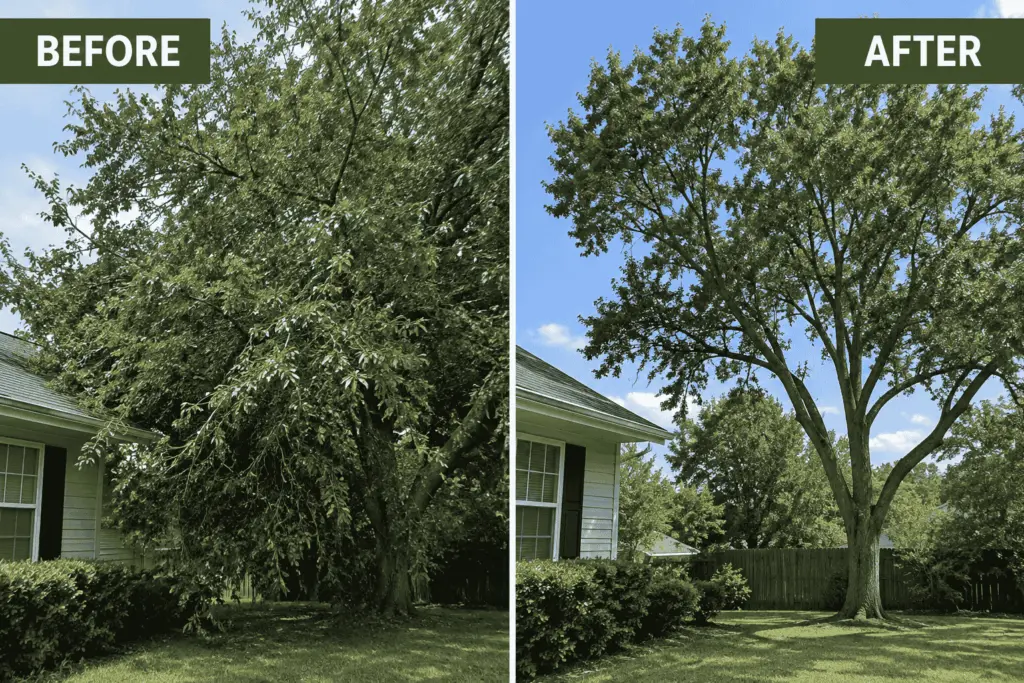
- Crown thinning. Selectively removing branches so more light and air pass through the canopy.
- Crown raising. Removing lower branches to clear sidewalks, driveways, roofs and sightlines.
- Crown reduction. Shortening branches back to a healthy side branch to lower height or spread.
- Structural pruning. Training a young tree to one main leader and well-spaced branches.
Which one does your tree need?
- Dead branches in the canopy: crown cleaning
- Limbs over the roof or scraping the gutters: crown raising or reduction
- A dense canopy that catches wind and snow: crown thinning
- A young tree with two competing tops: structural pruning
- A hedge or shrub that has outgrown its space: trimming
How much of a tree can be cut at once?
Less than most people expect. CSU Extension’s Denver Master Gardeners note that a healthy tree in its active growth phase can handle a pruning dose of 10% to 25% of its live wood. Taking more stresses the tree and triggers weak regrowth. How often that dose is needed is covered in how often to trim trees in Denver.
What is neither pruning nor trimming?
Topping. Cutting the main branches back to stubs is sometimes sold as a heavy trim, but it weakens the tree and leads to fast, poorly attached regrowth. The Colorado State Forest Service’s pruning advice is plain: do not cut off the tops of trees. See why tree topping harms trees and what to do instead.
Does the difference change the price?
Yes. A crown clean costs less than a crown reduction on the same tree, because less wood comes off and less rigging is needed. A quote should name the type of pruning so you can compare it with others. See tree trimming cost in Denver.
Pruning and trimming FAQs
Is pruning the same as trimming?
Not quite. Pruning targets dead, diseased or weak branches for the health of the tree, while trimming cuts back healthy growth for shape and clearance. In everyday use, and on most quotes, the two words mean the same visit.
Do arborists prune or trim trees?
Both. Arborists use pruning as the technical term and describe the work by type, such as crown cleaning, thinning, raising or reduction.
Does trimming a tree help it grow?
Good pruning helps a tree grow in a stronger shape by removing weak and competing branches. It does not make a tree grow faster, and removing too much live wood slows it down.